
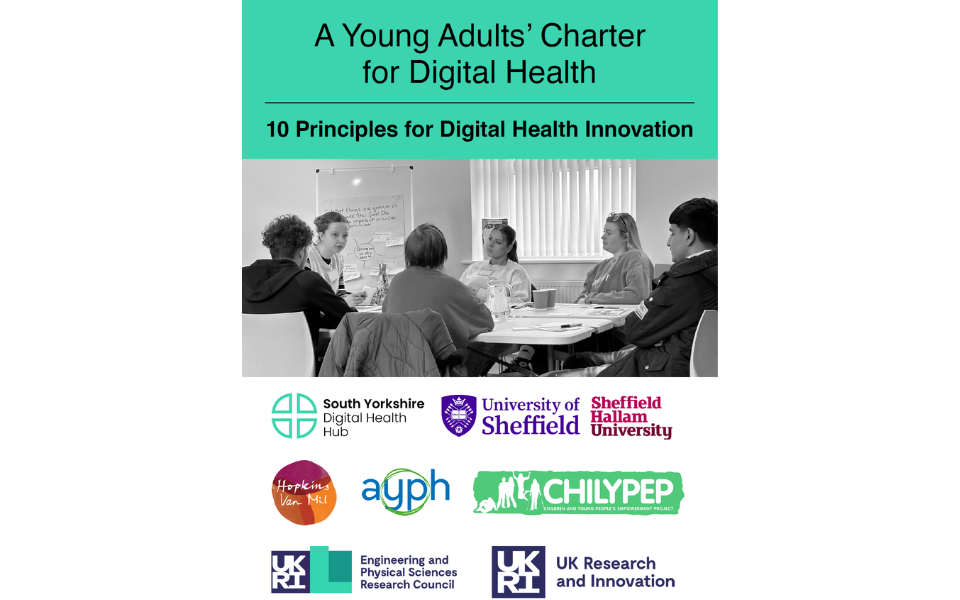
As the NHS pushes towards a ‘digital first’ approach to healthcare there is increasing need to understand how people use digital health technologies so they can be designed appropriately. This is especially true for young adults (age 18-25), who report worse experiences of healthcare and are underrepresented in digital health research and innovation. Without meaningfully involving young adults ‘digital first’ innovations risk recreating or increasing existing issues in how young adults experience and navigate healthcare.
In response the South Yorkshire Digital Health Hub worked with AYPH, Chilypep, and a diverse group of 12 young adults living with long-term health conditions in South Yorkshire to develop the Young Adults’ Digital Health Charter: 10 principles for digital health innovation. This work was also supported by input and facilitation support from AYPH’s young trainers, who shared their experiences of navigating their health and care with digital technologies. The full report and a briefing of the Charter is available online, providing insights into the needs and priorities of young adults.
As an academic researcher involved in the Charter, I was interested in understanding how young adults used digital technologies to manage their health compared to other groups that I had worked with previously. I was struck by how the young adults involved described changing their use of digital health technologies throughout their adolescence and young adulthood, something other adult generations would have rarely (if ever) experienced; and how their ability to consistently manage their health effectively was often complicated by factors beyond their control as they navigated young adulthood. These shared experiences underscored the need for young adults to be recognised as a distinct user group with unique and changing digital health needs, and for digital health innovation to be more inclusively designed.
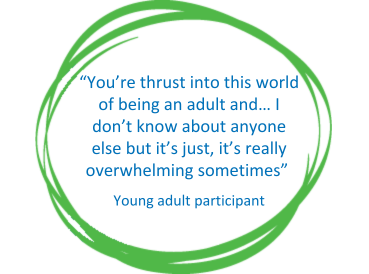
One key insight woven throughout the Charter was the need to move beyond assumptions about young adults and digital health, instead looking at how these technologies impact young adults’ lives. Young adults described how digital health technologies had sometimes become a part of their lives without effective training on how to select or how to use them appropriately, with assumptions of their digital literacy often shifting the burden of educating others to them; and how the personal costs of maintaining ongoing use of digital health technologies (such as the hardware or data plans needed to use some wearable or software tools) could limit their accessibility. Their experiences also shed light on how fractured digital health infrastructure can create barriers to young adults accessing digital health management tools or services consistently when moving within the UK for training, education, or independence.
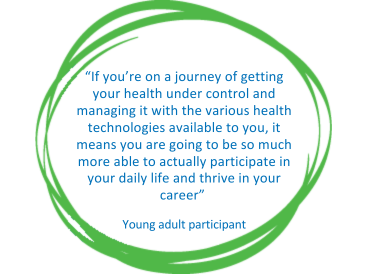
These insights highlight why young adults must be included in conversations about digital health. Young adults navigate rapid life changes; those managing long-term health conditions also often navigating the transition to adult health services alongside financial and administrative independence. Digital health policy and innovation should work with young adults to create digital tools, services, and infrastructure that reflect and work for this stage of life, rather than assume that they will be appropriate for a ‘digital-savvy’ generation. For a ‘digital first’ healthcare system, it is imperative that digital health developments meaningfully include young people in order to lay foundations that work for those using it today and the generations to come.
Author: Dr Kiersten Hay is a Research Fellow in public and community involvement and engagement in digital health at the South Yorkshire Digital Health Hub (SYDHH). Her design-led research focuses on how underrepresented groups can be more meaningfully involved in (digital) health research and innovation.
July 2026